Learning Never Stops: Studying for a Degree in Your Latter Years
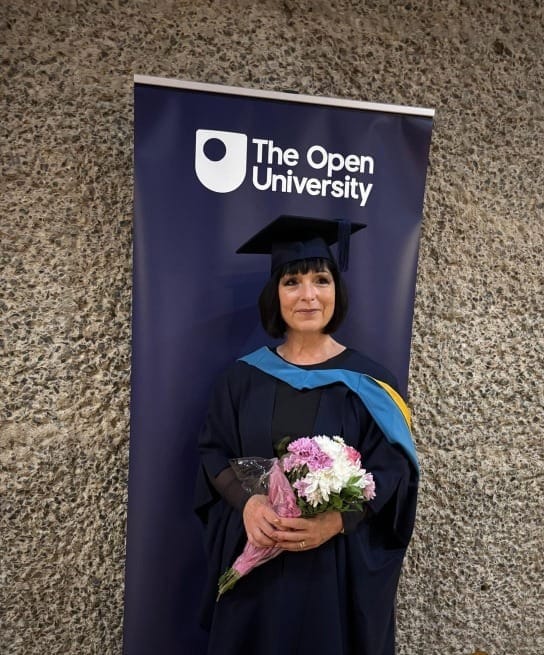
For many people, the latter years of life bring a welcome sense of freedom, time to breathe, reflect, and rediscover what truly matters. Increasingly, that freedom is being channelled into something deeply fulfilling, returning to education. Across the UK, thousands of people are taking up studying later in life, proving that learning really has no expiry date.
A New Chapter, not a Late One
Education in later life isn’t about starting over; it’s about continuing a lifelong journey of curiosity. Many people who left education early, to work, raise families, or follow other paths, now find themselves ready to explore subjects that once fascinated them. In your latter years, studying isn’t about climbing the career ladder or meeting deadlines for someone else. It’s about enjoyment, growth, and self-discovery. The freedom to learn on your own terms, without pressure or competition, makes education at this stage one of the most rewarding experiences of all.
Where to Study: Opportunities Across the UK
There are more routes into learning now than ever before, and they’re designed to be flexible, accessible, and welcoming to mature students.
- The Open University (OU): The OU has long been a favourite for adult learners. Its flexible, part-time or full-time courses allow you to study from home, at your own pace, with support from tutors and online forums. You can build up credits toward a degree or simply take individual modules that interest you.
- The University of the Third Age (U3A): For those who prefer informal, community-based learning, U3A offers local groups across the UK where members share skills and knowledge. There are no exams or qualifications, just friendly learning in everything from art history to science and philosophy.
- Local Colleges and Universities: Many universities now actively encourage mature students to apply for part-time or evening degrees. Adult learning departments often run “Access to Higher Education” diplomas, which prepare you for university study if you don’t already have traditional qualifications.
- Online and Short Courses: Platforms such as FutureLearn, Coursera, and edX offer online courses developed by UK and international universities. Many are free or low-cost, allowing you to explore a subject before deciding whether to pursue formal study.
- Community Learning and Adult Education Centres: Local councils often run adult education programmes offering everything from digital skills and creative writing to GCSEs and A-levels. These can be an excellent gateway into higher education or simply a chance to try something new.
Funding Your Studies
Cost is often the biggest worry for mature learners, but there’s good news: the UK has several options to make education more affordable.
- The Lifelong Learning Entitlement (LLE), launched fully in 2025, allows adults to access student finance for up to four years of post-18 study, whether all at once or spread across shorter courses.
- Student Finance England offers loans to part-time and mature students, with repayments only beginning once your income reaches a certain threshold.
- Bursaries and Fee Waivers are also available at many universities for students from low-income backgrounds.
- If you’re retired or semi-retired, some universities even allow you to audit lectures for free - meaning you can attend classes and enjoy the learning experience without being formally assessed or working toward a qualification. For example, the University of Oxford’s Department for Continuing Education and the University of Cambridge’s Institute of Continuing Education both run public lectures and short courses that can be attended informally, offering an accessible way to keep the mind active and engaged.
The Benefits of Learning Later in Life
Studying in your latter years offers far more than a qualification. Research shows that continued learning helps keep the mind active, improves memory, and boosts overall well-being. A recent study by Wu et al. (2023) found that older adults who participated in structured learning activities experienced significantly slower cognitive decline, equivalent to virtually six years of preserved brain function, compared with non-learners.
Many learners say education gives them renewed confidence, a sense of purpose, and a fresh outlook on life. It can also be wonderfully social. Universities and adult education centres bring together people of all ages and backgrounds, creating communities built around shared curiosity. For many, that sense of belonging and stimulation is just as valuable as the academic achievement itself.
Embracing the Challenge
Returning to study can feel daunting at first, especially if it’s been decades since you last wrote an essay or used a computer. But today’s universities and colleges are designed to support you every step of the way. Many offer study skills workshops, digital training, and mentoring for mature students.
The first assignment might feel intimidating, but that feeling soon gives way to pride and confidence. Every essay submitted, every discussion joined, and every new idea explored is proof that age is no barrier to growth.
A Celebration of Possibility
Studying in your latter years is a reminder that learning doesn’t belong to the young; it belongs to the curious. Whether through a formal degree, a U3A group, or an online course taken from your kitchen table, education offers connection, purpose, and joy.
As one mature graduate reflected, “It wasn’t about beginning again. It was about finally doing something for myself.”
So, if you’ve ever thought about returning to study, take that thought seriously. The opportunities are there, the support is available, and the rewards are limitless. Because while youth may fade, curiosity and the love of learning never do.
Reference
Wu, Y.-T., Steptoe, A., Fancourt, D., Zaninotto, P. and Feeney, J. (2023) Impact of later-life learning on trajectories of cognitive function: a nationally representative study. Innovations in Aging, 9(5), igaf023. https://doi.org/10.1093/geroni/igaf023