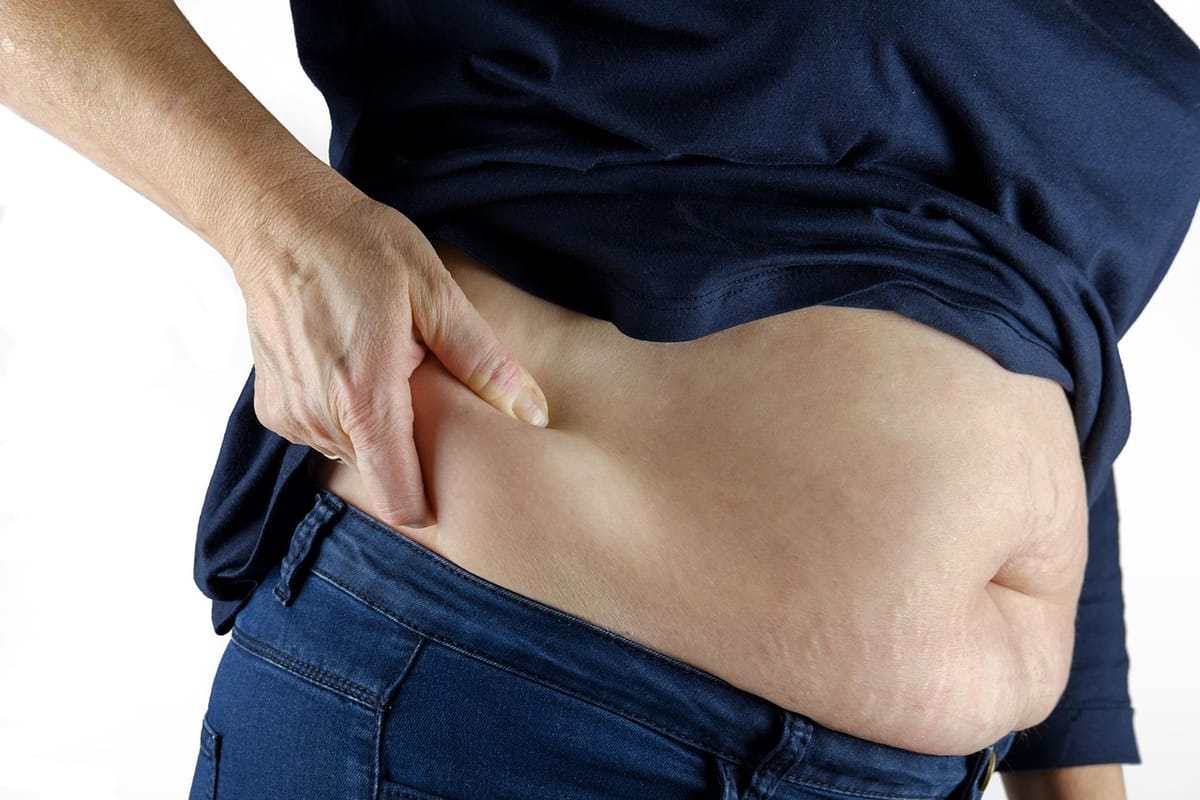
Why is my waistline expanding?

Does Your Metabolism Really Slow Down as You Age? A Midlife Reality Check
I’ve always suspected my metabolism had quietly packed its bags and left sometime in my late forties. You know the feeling — the scales creep up, your jeans suddenly feel tight after a perfectly normal weekend, and you start muttering things like, “I only have to look at a glass of wine and I put on weight these days.”
It’s a familiar lament among friends, both male & female. We often blame an ageing metabolism — that invisible engine we think runs ever more slowly with every birthday. But is it actually true? Has my internal “calorie furnace” really slowed down, or is something else going on?
I decided to dig into the science, because like many women and men, I want to know what’s really happening inside my body — and what, if anything, I can do about it.
The surprising truth about metabolism and age
Let’s start with the good news: your metabolism doesn’t fall off a cliff in middle age.
In fact, the largest and most rigorous study ever conducted on human metabolism — published in Science in 2021 by Dr. Herman Pontzer and colleagues — found that our energy expenditure remains remarkably stable from about age 20 right through to 60.
The researchers analysed over 6,400 people aged from 8 days to 95 years, using the gold-standard “doubly labelled water” method to measure how much energy the body burns in real life, not just in lab conditions. The results were startling: metabolism doesn’t decline until after 60, and even then, it only slows by roughly 0.7% per year.
So, no, your metabolism didn’t suddenly collapse when you turned 50. What often changes is how we live — less movement, more sitting, a little less muscle, and perhaps a bit more indulgence. Guilty as charged.
Why we still gain weight in midlife
If metabolism is so stable, why do so many of us start to gain weight? The answer lies in body composition and hormones, not just calorie burning.
Both men and women start to lose lean muscle mass from their 40s onwards — around 3–8% per decade, according to a study in the American Journal of Clinical Nutrition (Janssen et al., 2002). Because muscle tissue burns more energy than fat, that slow erosion subtly reduces our overall energy needs.
At the same time, hormonal shifts change where we store fat and how our bodies use it. For women, the menopause transition brings falling oestrogen, which encourages visceral fat — the kind that settles around the abdomen and internal organs. For men, a gradual drop in testosterone (sometimes called andropause) has a similar effect: less muscle, more belly.
The result is what we see all around us — the classic “middle-aged spread,” or in men, the much-lamented beer belly. Although alcohol plays a part (those empty calories do add up), the real driver is hormonal and muscular.
And yes, that makes the “beer belly” label slightly unfair to beer alone.
Men versus women: different paths, same destination
Men and women experience metabolic change in slightly different ways. Men naturally have more muscle mass, so their resting metabolic rate — the calories burned just keeping the lights on — is higher. Women, however, tend to be more metabolically efficient, especially in using fat as an energy source during longer activity.
When oestrogen levels fall after menopause, women’s bodies lose some of that efficiency, while men experience a slow, quiet drop in testosterone. Both lead to muscle loss, less calorie burn, and a tendency to store fat centrally.
A 2022 review in Obesity Reviews (Lovejoy et al.) notes that the rate of metabolic decline is similar for both sexes, but the hormonal cascade makes the effects feel more dramatic in women. It’s not that women’s metabolism collapses — it’s that oestrogen’s protective influence on where fat is stored and how insulin functions begins to wane.
Digesting the truth: how our food processing changes
Beyond the hormonal shifts, our bodies physically change in how they handle food.
By the time we’re in our fifties, we often produce less stomach acid, which can make it harder to absorb key nutrients like vitamin B12, calcium, iron, and magnesium. The gut microbiome — that thriving ecosystem of bacteria — also becomes less diverse with age, according to research in Nature Reviews Gastroenterology & Hepatology (O’Toole & Jeffery, 2015).
The impact? Digestion may slow a bit, bloating becomes more common, and nutrient absorption less efficient. Some people notice they can’t “get away” with big, rich meals anymore without discomfort or fatigue.
And yes, our thirst response dulls as we age — which is why many older adults become mildly dehydrated without realising it. Dehydration can sap energy, cloud thinking, and make hunger cues confusing. Sometimes we’re not hungry, just thirsty.
How the decades differ — and what to do about it
The key to navigating these changes isn’t to panic, but to adapt. What worked in our 30s may need tweaking in our 50s and beyond. Here’s how to think about each stage.
40s → 50s: Hold the line
Your metabolism is still strong — but muscle maintenance becomes crucial.
- Prioritise protein: Aim for 1.2–1.6 g per kg of body weight daily. Include eggs, fish, poultry, Greek yoghurt, pulses, and tofu.
- Lift something heavier than a wine glass: Strength training 2–3 times a week is the best insurance against future slowdown.
- Watch portion creep: Work and family stress often drive mindless snacking.
- Mind alcohol and caffeine: Both interfere with sleep, which affects appetite hormones (ghrelin and leptin).
Think of this decade as metabolic “prevention.” Keep your muscle and habits strong, and your 60s self will thank you.
50s → 60s: Manage the transition
This is when the hormonal shifts really kick in.
- Menopause management: Whether through diet, HRT, or lifestyle, stabilising oestrogen can help reduce visceral fat gain.
- Protein becomes non-negotiable. Each meal should contain 20–30 g of high-quality protein.
- Feed your gut: Fibre (30 g/day) from wholegrains, vegetables, legumes, and fermented foods like kefir or sauerkraut supports digestion and immunity.
- Rethink carbs: Not all carbs are villains. Opt for slow-release ones — oats, lentils, brown rice — to keep blood sugar steady.
- Move daily: Even gentle movement — walking, yoga, or dancing — helps regulate insulin and maintain lean mass.
And for the men? The same rules apply, with an extra emphasis on resistance training and moderating alcohol. Midlife men often underestimate how little activity they do compared to younger years. A couple of pints and a curry might have been fine at 30; at 55, it’s a different story metabolically.
60s → 70s: Preservation mode
After 60, that subtle 0.7% annual metabolic slowdown begins. It’s not catastrophic — but it does mean the body burns roughly 100–150 fewer calories per day than it did a decade earlier.
- Protein at every meal helps offset muscle loss (sarcopenia). Foods rich in the amino acid leucine (found in eggs, fish, chicken, beans) are especially beneficial.
- Stay hydrated: Aim for around 2 litres of fluids daily. Even mild dehydration can cause fatigue or dizziness.
- Micronutrients: B12, vitamin D, magnesium, and zinc are often low; a GP check or good supplement can help.
- Balance over brute force: Gentle strength, balance, and flexibility training (like Pilates or resistance bands) protect against falls and frailty.
- Keep calories steady, not starved: Extreme calorie restriction risks further muscle loss. Better to eat nutrient-dense foods in moderate portions.
By this point, it’s less about “speeding up” metabolism and more about protecting the body’s efficiency — keeping the machinery well-oiled, rather than forcing it to run faster.
Metabolism isn’t your enemy — neglect is
One of the biggest myths in health is that metabolism is fixed or doomed. In truth, it’s highly adaptable. Every time you walk briskly, climb stairs, or do some strength training, you’re sending a powerful signal to your metabolism to stay active and resilient.
And while we can’t turn back the hormonal clock, we can influence how our bodies respond. Diet quality, muscle mass, sleep, and stress management all feed into how efficiently we use energy.
What’s striking is that the difference between thriving and struggling in your 60s isn’t some mysterious metabolic “gift.” It’s the cumulative effect of small, consistent habits — mostly ones we control.
A word about the male “beer belly”
Let’s circle back to the beer belly, The male beer belly isn’t just beer; it’s biology meeting lifestyle.
As testosterone ebbs, muscle mass falls, insulin resistance creeps in, and fat begins to cluster around the abdomen. Throw in pints, processed food, and sedentary lifestyle, and you have the perfect metabolic storm.
But men respond brilliantly to strength training and protein-focused eating. Studies show they can regain lost muscle faster than women once they start training consistently. So the “dad bod” isn’t destiny — it’s merely an option.
The takeaway: nurture your metabolism
After sifting through all this research, I’ve come to see metabolism less as a number on a chart and more as a relationship. You can’t bully it into submission with crash diets or miracle teas, but you can keep it happy — by feeding it well, challenging it often, and resting it enough to recover.
Your metabolism doesn’t betray you as you age; it mirrors how you live. Feed your muscles, move your body, manage your hormones, and treat your gut kindly — and your metabolism will stay far more robust than you think, well into your seventies and beyond.
As for me, I’ve stopped saying “my metabolism is slowing down” and started saying “my metabolism needs better company.”
A pair of dumbbells, a morning walk, a plate full of colourful food — and, yes, the occasional glass of wine for morale. Because life, like metabolism, is all about balance.
References
- Pontzer H. et al. “Daily energy expenditure through the human life course.” Science, 373(6556), 808–812 (2021).
- Lovejoy J.C. et al. “Body composition and metabolism in the menopause transition.” Obesity Reviews, 23(2): e13388 (2022).
- Janssen I. et al. “Skeletal muscle mass and distribution in 468 men and women aged 18–88.” American Journal of Clinical Nutrition, 76(2): 495–502 (2002).
- O’Toole P.W. & Jeffery I.B. “Gut microbiota and aging.” Nature Reviews Gastroenterology & Hepatology, 12(11): 623–632 (2015).
- Phillips S.M. et al. “Resistance training in older adults: position stand.” Frontiers in Nutrition, 4: 42 (2017).